
How Hyderabad companies can safely dispose of obsolete laptops, computers, servers, hard drives, and other IT assets through documented e-waste collection, data destruction, and responsible recycling
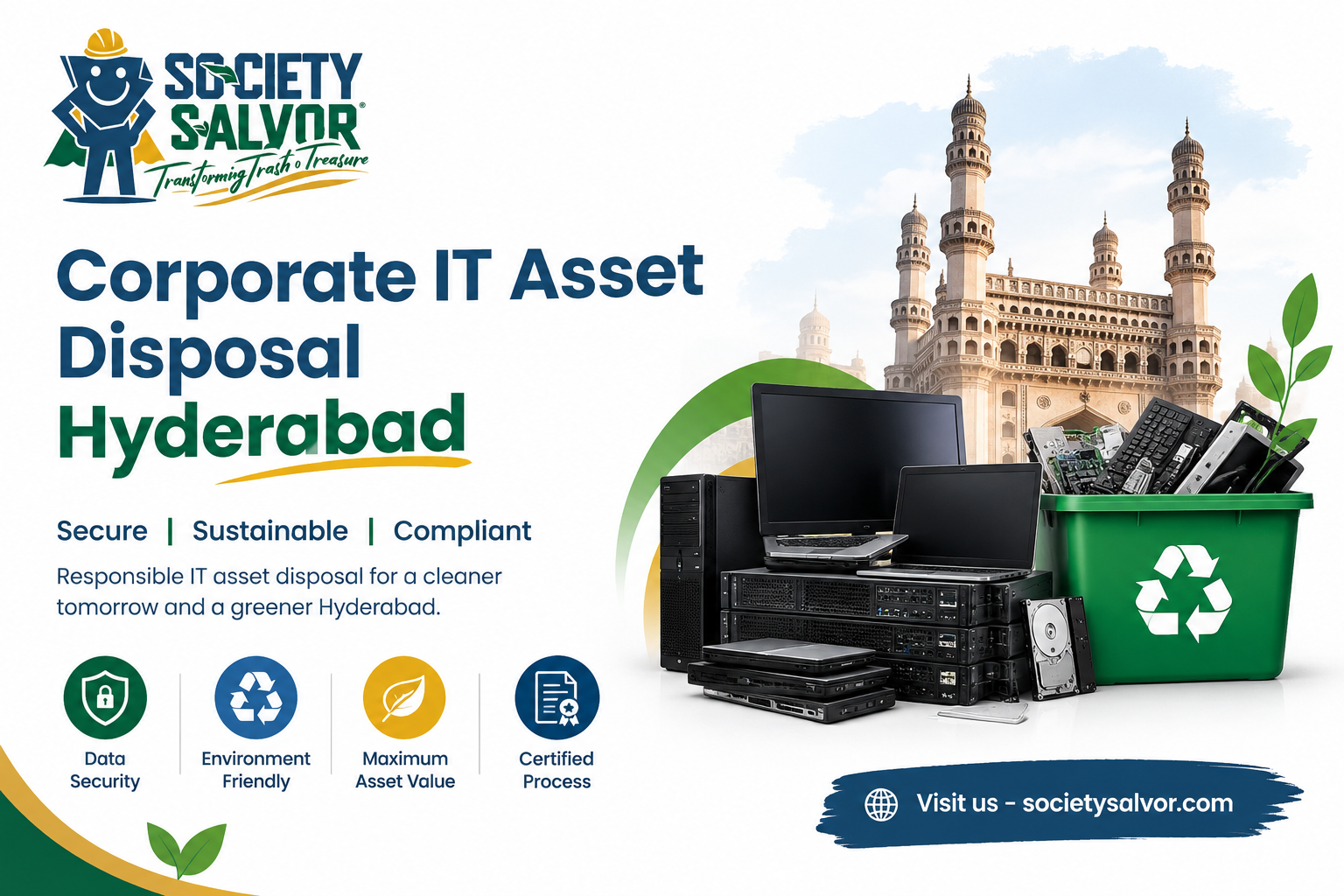
When old laptops, servers, computers, and other electronics accumulate, businesses face data-security and storage concerns. Corporate IT asset disposal Hyderabad should include identification, secure handling, documentation, weighing, recycling, and responsible collection.
The focus is straightforward: How Hyderabad companies can safely dispose of obsolete laptops, computers, servers, hard drives, and other IT assets through documented e-waste collection, data destruction, and responsible recycling.
For companies, this approach can reduce storage problems while creating a clearer chain of responsibility for equipment leaving the workplace.
Why should businesses treat old IT equipment differently?
Old electronics may retain sensitive employee, customer, financial, and company information, even after laptops, hard drives, or servers become non-functional.
Therefore, businesses should separate two tasks:
- Protect the information stored on the equipment.
- Ensure the physical equipment is handled responsibly.
Before collection, companies should identify all equipment being disposed of and create an asset list recording types, quantities, internal numbers, and disposal dates for future reference.
What should the disposal process look like?
A structured corporate IT asset disposal Hyderabad process should begin before the scrap is collected.
Start with an internal asset review
Identify obsolete equipment, separate usable and damaged devices, back up necessary information, and prepare a basic inventory detailing assets before handing them over for collection.
Separate data-bearing equipment
Separate data-bearing devices such as laptops, desktops, servers, SSDs, USB drives, and hard disks from other electronics, ensuring they receive appropriate data destruction before recycling or disposal.
Arrange documented collection
Organise office collection through a professional provider that records, assesses, and weighs equipment, while maintaining documentation of materials handed over, especially for large accumulated IT assets.
How does secure data handling fit into the process?
Data destruction should take place before storage devices enter regular recycling streams. Simply deleting files may not provide sufficient assurance that sensitive business information is no longer accessible.
Secure data destruction Hyderabad involves a controlled approach based on the device, information stored, and company requirements. Businesses should determine the appropriate method before disposal.
Reusable equipment and storage media requiring destruction may need different handling. For example, devices prepared for reuse can follow a suitable data-sanitisation process, while media intended for recycling may require stronger treatment to prevent readable information from remaining.
What records should companies retain?
Businesses should keep records that demonstrate what happened to their assets.
Depending on the disposal arrangement, useful documentation may include:
- Collection date
- Equipment or material description
- Quantity
- Weight where applicable
- Asset identification details
- Data destruction details, where applicable
- Final disposal or recycling information
- Payment or transaction details
These records can make internal audits and future asset reviews easier.
How can a scrap company support office disposal?
A suitable disposal company can simplify office clearance by collecting obsolete computers and electronics directly from the workplace, reducing staff effort, transportation needs, and temporary storage requirements.
Businesses considering IT equipment disposal Hyderabad should review the provider’s collection process, documentation, accepted materials, and electronic waste handling practices before arranging pickup.
Furthermore, a responsible provider should clearly explain what happens after collection. This helps businesses understand how their equipment is assessed, weighed, processed, and directed toward appropriate recycling or disposal rather than treating the handover as an unclear final step.
What happens to computers after collection?
After collection, equipment is assessed based on its condition and material composition. Usable components may be recovered, while unsuitable devices can be directed toward appropriate recycling channels.
For computer and laptop recycling for companies, responsible processing helps keep recoverable materials within suitable recycling streams instead of mixing electronic waste with general waste.
Therefore, businesses should understand how collected equipment will be handled after leaving the office. Clear information about assessment, material recovery, recycling, and final processing provides greater transparency throughout the disposal process.
What should companies consider when choosing a disposal provider?
Choosing a provider involves more than comparing scrap rates.
A business should consider whether the company can:
- Collect from the workplace
- Handle different categories of electronic scrap
- Provide clear weighing and pricing information
- Maintain collection records
- Explain its recycling process
- Address data-bearing equipment appropriately
- Provide clear transaction documentation
- Handle larger quantities when required
For office e-waste disposal Hyderabad, these details can make the difference between a simple collection and a properly managed disposal process.
Price is relevant, but it should not be the only consideration when sensitive business equipment is involved.
How does responsible recycling benefit a company?
Responsible recycling helps businesses clear equipment with no practical value while freeing storage space and reducing accumulation. Electronics may also contain materials suitable for recovery through appropriate recycling processes.
For obsolete IT asset recycling Hyderabad, separating equipment before collection can simplify handling and help the disposal provider identify the materials being handed over.
This organised approach also supports better asset management by allowing companies to distinguish different equipment categories and direct them toward suitable recycling or disposal channels based on their condition and composition.
What mistakes should businesses avoid?
Several common mistakes can make IT disposal unnecessarily risky.
- Treating deletion as complete data destruction: Removing files from a device is not automatically equivalent to secure sanitisation or physical destruction.
- Mixing everything together: Laptops, hard drives, cables, monitors, batteries, and other materials may require different handling.
- Keeping no disposal record: Without basic records, it becomes difficult to establish what equipment left the premises.
- Choosing only on price: The highest scrap value does not necessarily correspond with the most appropriate disposal process.
- Leaving obsolete equipment in storage indefinitely: Unused equipment takes up space and can become harder to track over time.
These issues show why electronic asset disposal for businesses should be planned as an operational process rather than treated as routine office housekeeping.
Why is documented collection becoming more important?
A documented process creates a clear record when equipment moves from company possession to an external collector. This helps businesses track assets and maintain better control over disposal activities.
For larger offices, documentation becomes particularly useful when equipment comes from multiple departments, employees, branches, or different replacement cycles. It provides a consistent record throughout the process.
A practical workflow can include identification, recording, separation, data security, collection, weighing, documentation, and recycling. Corporate e-waste collection Hyderabad becomes easier to manage when each stage follows a defined process.
How can businesses approach disposal more responsibly?
Companies can begin by creating an inventory, separating data-bearing equipment, confirming what information must be protected, and asking the disposal provider about its collection and recycling procedures.
They should also clarify how weighing and pricing are handled. A transparent process should allow the company to understand what was collected and how the final transaction was calculated.
For organisations planning corporate IT asset disposal Hyderabad, this level of preparation can make disposal easier to manage while reducing uncertainty around old equipment.
A practical local option for business scrap collection
Society Salvor provides scrap collection services across Hyderabad and Secunderabad, with doorstep collection, material assessment, weighing, updated pricing, and final billing as part of its stated process.
The company accepts several categories of scrap, including electronic waste, and its stated transparency policy covers pricing, weighing, customer verification, and billing. Its broader model also connects scrap proceeds with NGO-related causes.
For a business clearing accumulated office electronics, we can help organise the collection of eligible scrap from your premises. You can discuss the material available, collection requirements, weighing, pricing, and transaction details before proceeding. We aim to keep the process straightforward and transparent from pickup to final billing.
Contact us to arrange a scrap pickup in Hyderabad.
conclusion
Corporate IT disposal should be handled with attention to both information security and responsible recycling. Old laptops, computers, servers, hard drives, and other electronics should not simply be abandoned or mixed with general waste.
A structured process can help businesses identify assets, protect sensitive information, document collection, verify weighing, and direct electronic materials toward appropriate recycling. Furthermore, choosing a disposal provider that explains its process clearly can make large-scale office clearance easier to manage.
For Hyderabad companies, the right approach is therefore simple: identify the assets, secure the data, document the handover, and ensure the equipment reaches an appropriate recycling or disposal channel.