
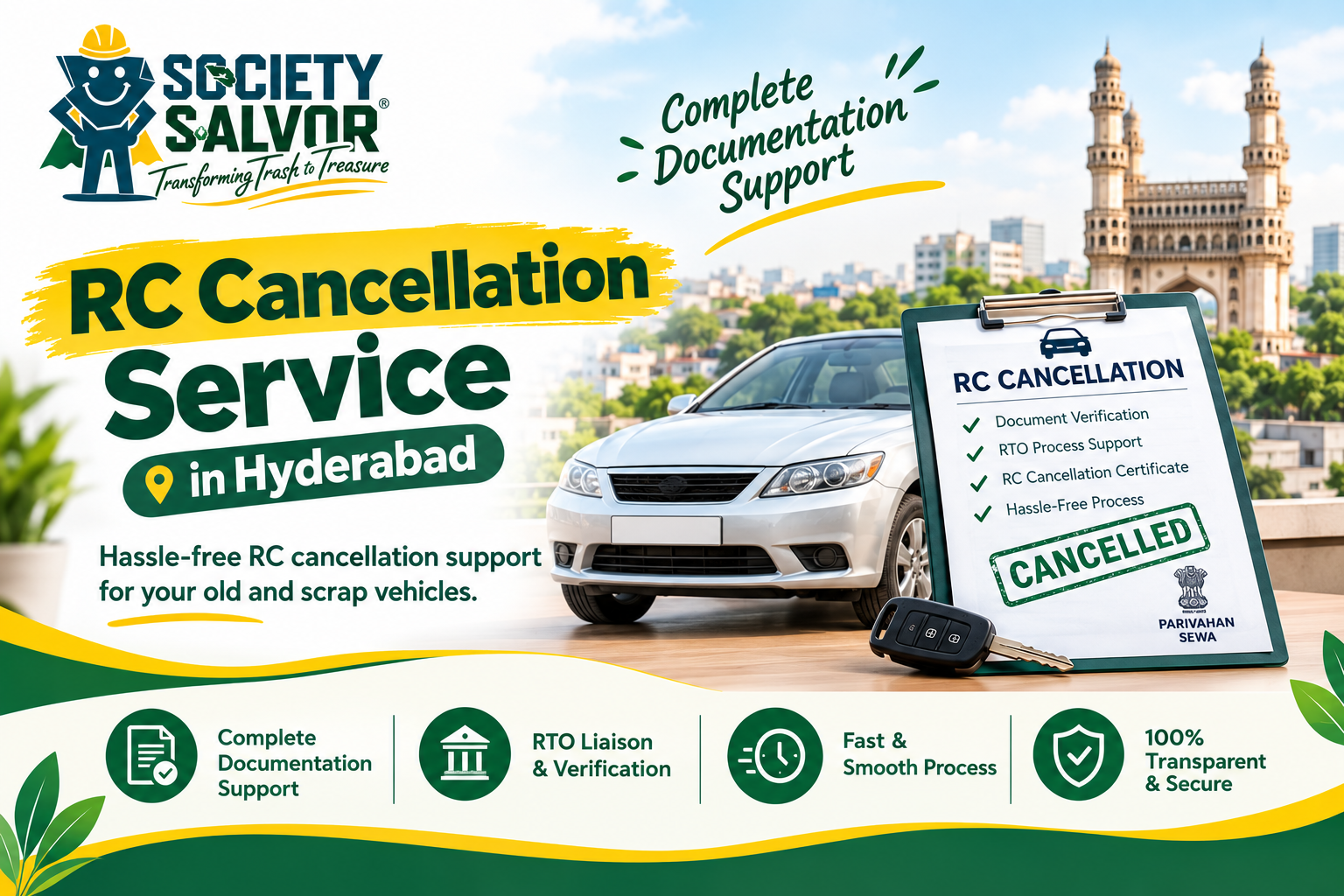
Scrapping an old vehicle does not end with handing it over for recycling. The vehicle also needs to be formally deregistered so that its registration records reflect its end-of-life status. This is where an RC Cancellation Service becomes relevant for vehicle owners in Hyderabad.
The process connects vehicle verification, documentation, online filing, physical scrapping, and the Certificate of Destruction (COD). Understanding how these stages fit together can help owners know what happens to their vehicle after it is collected and what documents they should retain.
This blog covers the key stages involved, including RC verification, required documents, online filing, vehicle pickup, authorised scrapping, COD issuance, payment, and the connection between vehicle destruction and final registration cancellation.
Why Does RC Cancellation Follow Vehicle Scrapping?
A vehicle remains connected to its registration records even when it is no longer being used. Therefore, physical disposal and administrative deregistration are two related but distinct parts of the process.
The provided information states that vehicles may be considered for scrapping when they are 15 years or older, have failed a fitness test, or are damaged beyond repair. An owner may also choose to scrap while upgrading to another vehicle.
Once an eligible vehicle enters the authorised scrapping process, its registration status needs to be addressed as part of the overall disposal. This prevents the process from stopping at simply removing the vehicle from the owner’s garage.
What Happens Before the Cancellation Process Begins?
The first stage involves verifying the vehicle and its registration details. The owner is required to share the front and back of the RC for verification.
After the details are checked, a scrap price quote is provided based on the vehicle’s condition. This establishes the commercial part of the transaction before the vehicle is collected.
The required information also includes Aadhaar, PAN, email address, mobile number, and bank details. These details support the documentation and payment stages of the process.
Furthermore, the online filing mentioned on the webpage is completed through vscrap.parivahan.gov.in. This means the administrative process is connected with the stated government vehicle-scrapping platform rather than being limited to an offline exchange.
How Does RC Cancellation Take Place After Pickup?
Once verification and documentation are complete, the vehicle can be collected from the owner’s location. Doorstep pickup is available across Hyderabad. After collection, it enters the authorised scrapping process, linking physical destruction with registration cancellation.
An RC Cancellation Service involves more than handing over the registration document. The vehicle must pass through the appropriate scrapping channel, where its destruction is formally recorded. This creates a documented connection between scrapping and deregistration.
The authorised Registered Vehicle Scrapping Facility issues a Certificate of Destruction (COD), stated to be provided within seven working days. It confirms the vehicle’s destruction and supports RC cancellation. Owners should retain this important record for future reference.
What Documents Are Involved in the Process?
Documentation is an important part of vehicle deregistration. The information supplied by the website identifies several items that may be required during the process.
These include:
- Front and back of the vehicle’s RC
- Aadhaar details
- PAN details
- Email address
- Mobile number
- Bank information
The RC is particularly important at the beginning because it allows the vehicle details to be verified. The identity and payment information supports the remaining administrative and financial steps.
Consequently, owners should keep their documents accessible when starting the process. Having the required information available can make verification and submission more straightforward.
How Does an Authorised Facility Support Deregistration?
The provided information states that Society Salvor works with an authorised Registered Vehicle Scrapping Facility (RVSF). This relationship is significant because the scrapping process involves more than collecting an unwanted vehicle.
An authorised facility handles the formal destruction process and issues the COD. The document then forms part of the registration cancellation process.
This distinction is particularly relevant for owners of old, damaged, or non-working vehicles. Handing a vehicle over for scrap without understanding what happens to its registration can leave the owner uncertain about its official status.
A formal scrapping route provides a documented connection between collection, destruction, and deregistration.
Does the Process Apply to Different Types of Vehicles?
The process is not limited to one vehicle category. The supplied content states that cars and SUVs, bikes and scooters, commercial vehicles, and damaged or non-working vehicles can be accepted.
Commercial vehicles include trucks, vans, buses, and fleet vehicles. This means the need for documented disposal can arise in both personal and business situations.
For example, an owner replacing an old car may need to complete the process after deciding that continued use is no longer practical. Similarly, a business replacing fleet vehicles may have multiple vehicles that require appropriate disposal.
The underlying principle remains the same: the vehicle is collected for formal scrapping, and its destruction is documented through the relevant process.
What Happens Financially After the Vehicle Is Scrapped?
Vehicle scrapping also involves payment for the scrap value. The supplied information states that the owner receives a scrap price based on the vehicle’s condition and that payment is made through an instant bank transfer.
The website also states that owners may be eligible for lifetime road tax rebates and manufacturer-specific incentives after scrapping. However, eligibility for these benefits can depend on the applicable conditions.
The COD is relevant here because it provides documentation of the vehicle’s destruction. Owners should therefore retain it along with other records connected with the scrapping transaction.
Why Should Owners Keep the Scrapping Records?
Once the vehicle leaves your possession, documents provide a clear record of the scrapping process. The verified RC details, payment information, and COD together track important stages, with the COD confirming destruction through the authorised facility.
Keeping these records helps you refer to the transaction later, particularly when checking details related to deregistration or applicable benefits. This documentation provides greater clarity after the vehicle has been collected and processed.
Unlike ordinary scrap disposal, vehicle scrapping also involves registration-related responsibilities. An Vehicle RC Cancellation Service connects collection with formal documentation and deregistration, showing that proper disposal concerns both the physical vehicle and its official records.
What Does the Complete Process Look Like?
The RC Cancellation Service process can be viewed as a sequence of connected steps:
- The owner shares the front and back of the RC for verification.
- The vehicle’s details and condition are assessed.
- A scrap value quote is provided.
- Required personal and banking information is submitted.
- Online filing is handled through the stated vehicle-scrapping platform.
- The vehicle is collected from the owner’s location.
- The vehicle is processed through the authorised RVSF.
- Scrap payment is transferred to the owner’s bank account.
- The Certificate of Destruction is issued within the stated timeframe.
- The COD supports cancellation of the vehicle’s RC.
This sequence shows why cancellation is not a single isolated action. Each stage contributes to completing the vehicle’s disposal and registration process.
Make the Final Step of Vehicle Disposal Simpler
At Society Salvor, we help you connect vehicle pickup with the documentation and scrapping stages described above. We can support the process from RC verification and quotation through doorstep collection, bank payment, and COD issuance.
Whether you are replacing an ageing car, disposing of a damaged vehicle, or clearing an unusable commercial vehicle, we keep the process focused on convenience and documented disposal. Our wider scrap collection work also supports responsible recycling and NGO-related social causes.
You can arrange a pickup and discuss your vehicle’s scrapping requirements with us. Contact us to get started.
Conclusion
RC cancellation is an important final stage when an old vehicle is scrapped. The process connects vehicle verification, required documentation, online filing, authorised destruction, payment, and issuance of the Certificate of Destruction. Understanding these stages helps owners follow the vehicle’s transition from active registration to documented disposal.
An RC Cancellation Service gives owners a clearer view of what happens after the vehicle is collected. The RC, identity details, payment records, and COD create documentation throughout the process. Keeping these records can help when referring to deregistration or applicable benefits later.
Ultimately, responsible vehicle scrapping involves more than removing an unwanted vehicle from your premises. It also involves completing registration formalities and retaining proof of destruction. A documented process provides clarity and supports a smoother end to the vehicle’s registered journey.