
An old car can become difficult to maintain long before it completely stops working. Repairs become frequent, insurance may become harder to renew, and keeping the vehicle parked can create another problem. At that point, car scrapping in Hyderabad can be a practical way to deal with a vehicle that has reached the end of its useful life.
However, scrapping is not simply about handing over a vehicle and receiving money. A proper process involves vehicle assessment, documentation, deregistration, dismantling, recycling, and responsible handling of materials. Each stage matters because an improperly disposed vehicle can create legal, financial, and environmental problems.
The process is particularly important for older vehicles, accident-damaged cars, and vehicles that are no longer economically viable to repair. Understanding what happens behind the scenes can help owners make better decisions and avoid informal disposal methods.
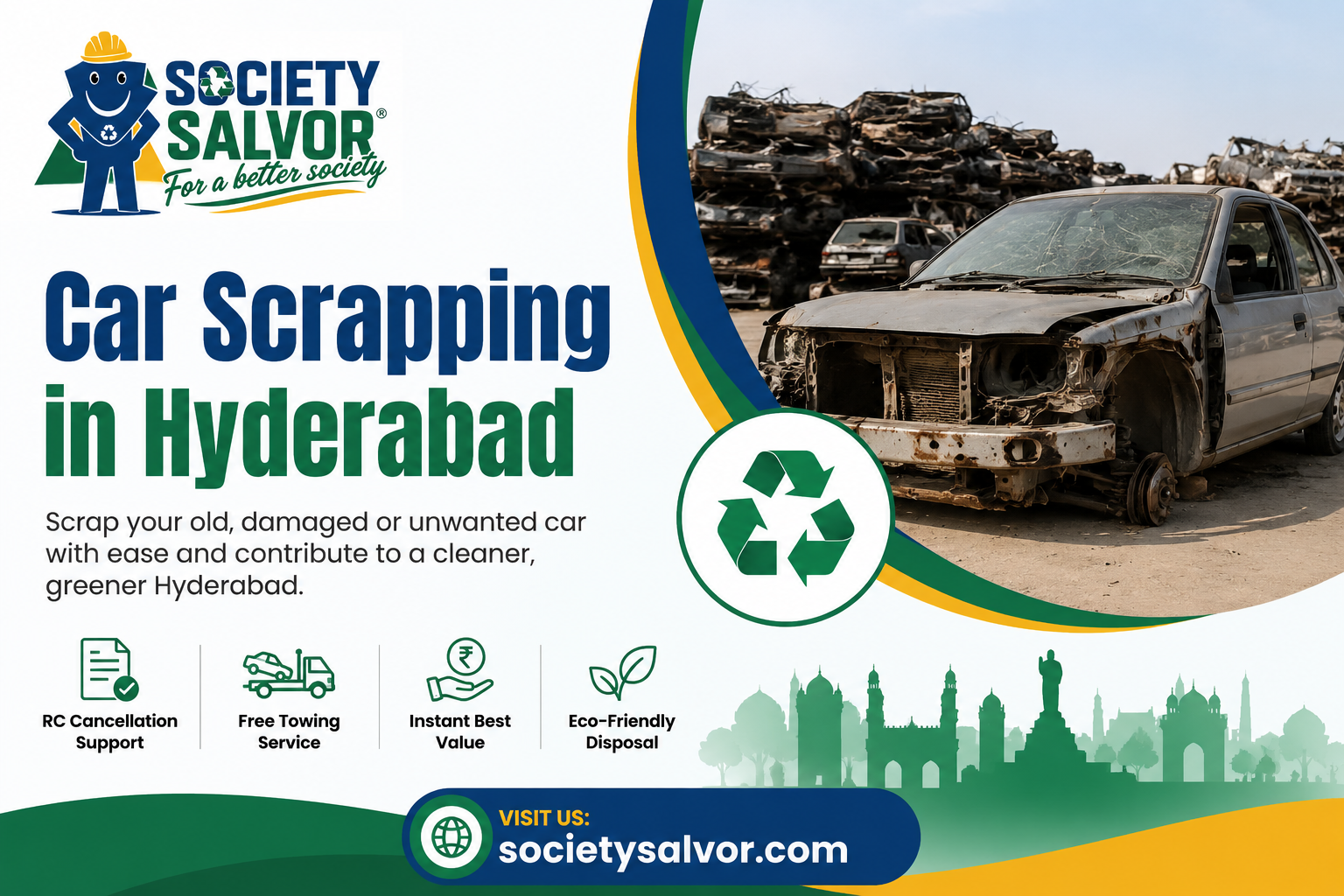
Why Does an Old Vehicle Eventually Become a Scrapping Candidate?
A vehicle does not necessarily become scrap just because it looks old. Its condition, usability, repair costs, fitness, and remaining value all influence the decision.
For example, an accident-damaged vehicle may still have usable components even when repairing the entire car is uneconomical. Similarly, an ageing vehicle may continue running but require increasingly expensive maintenance.
Some common situations include:
- The vehicle has reached the end of its practical service life.
- Repeated mechanical failures make continued ownership expensive.
- Accident damage makes restoration financially impractical.
- The vehicle cannot meet applicable fitness requirements.
- The owner is replacing an old vehicle with a newer one.
- An unused vehicle has been occupying valuable parking or garage space.
Consequently, scrapping can sometimes make more sense than continuing to spend money on a vehicle that offers little practical value.
What Determines the Value of a Scrap Vehicle?
The final scrap value depends on factors such as the vehicle’s weight, metal composition, condition, and recoverable components, not merely its age or model.
Other considerations can include:
- Current scrap material rates
- Vehicle weight
- Make, model, and manufacturing year
- Condition of major components
- Quantity and type of recoverable materials
- Usable spare parts
Therefore, an online estimate should not automatically be treated as the final amount. A physical assessment and weighing can provide a more realistic valuation.
What Happens to the Vehicle After Collection?
Once a vehicle reaches an authorised scrapping facility, it should not simply be crushed immediately. A structured dismantling process allows valuable materials and components to be recovered while potentially hazardous substances are handled appropriately.
First, the vehicle is inspected and processed according to the facility’s procedures. Reusable components may be separated from materials intended for recycling.
Next, fluids and other materials requiring controlled handling need to be dealt with properly. Components such as batteries, tyres, plastics, glass and metals can then follow their respective recovery or disposal streams.
This distinction is important. Responsible vehicle recycling is not merely about reducing the physical size of a car. It is about recovering useful resources while limiting unnecessary environmental harm.
Why Does Legal Deregistration Matter So Much?
One of the most overlooked parts of scrapping is what happens to the vehicle’s registration.
Simply selling an old car to an informal buyer does not necessarily mean that its registration record has been properly closed. This can create complications if the vehicle continues to appear under the previous owner’s name.
A formal process addresses this through appropriate deregistration and documentation. Owners may need to provide identification and vehicle-related documents so the relevant records can be updated.
A Certificate of Destruction can also serve as important evidence that the vehicle has entered an authorised scrapping process.
This is one reason owners should understand the difference between legitimate vehicle scrap in Hyderabad services and informal disposal arrangements. The physical removal of a car and the legal closure of its ownership record are two separate matters.
How Does RC Cancellation Fit Into the Process?
The Registration Certificate connects the vehicle to its official registration record. When a vehicle is permanently scrapped, dealing with that record becomes an essential part of the process.
The exact documentation and procedure can depend on the vehicle and applicable requirements. Generally, the owner provides the necessary information and supporting documents so the deregistration process can be completed through the appropriate system.
For owners, the practical benefit is clear. They have a documented path for closing the vehicle’s registration rather than relying on an informal handover.
Furthermore, keeping copies of submitted documents, payment records and certificates can be useful for future reference.
What Environmental Difference Can Proper Scrapping Make?
Vehicles contain much more than metal. They may contain oils, coolants, batteries, plastics, rubber, glass and electronic components.
If these materials are abandoned or dismantled carelessly, they can contribute to soil and water contamination. Some materials also require specialised handling.
A structured recycling process allows metals and other recoverable materials to re-enter productive use. This reduces the need to obtain the same quantity of raw materials from new sources.
There is also a practical benefit. Recycling a vehicle can recover resources that would otherwise remain locked inside an unused asset.
Thus, responsible scrapping connects vehicle disposal with broader resource conservation rather than treating the car as ordinary waste.
What Should Owners Consider Before Handing Over a Car?
Before scrapping, assess whether the vehicle is still repairable and roadworthy. If scrapping is appropriate, keep the RC and required ownership documents ready for processing.
It is also worth checking how the buyer handles:
- Vehicle valuation
- Weighing
- Payment
- Pickup arrangements
- Deregistration
- Certificate issuance
- Recycling and dismantling
Price should not be the only consideration. A slightly higher informal offer may become less attractive if documentation is incomplete or ownership records remain unresolved.
This is where comparing established car scrap dealers in Hyderabad with a clear understanding of their process can help owners make a more informed decision.
How Can Vehicle Owners Avoid Common Scrapping Problems?
Several simple precautions can reduce unnecessary complications.
Before collection, remove personal belongings from the vehicle. Check compartments, the boot, glovebox and storage areas. Keep copies of important documents and transaction records.
Owners should also clarify how the vehicle will be weighed and how the quoted amount relates to the final valuation. If the vehicle contains accessories or components with separate value, ask how they will be treated.
Most importantly, do not assume that physical pickup means the administrative process is finished. Confirmation of deregistration and relevant certification should be retained.
These small steps create a clearer record and make the overall experience easier to manage.
Why Is Responsible Scrapping More Than Simply Selling an Old Car?
The real purpose of car scrapping in Hyderabad extends beyond recovering money from an unwanted asset.
For the owner, it provides a practical way to move on from a vehicle that has become uneconomical or unusable. For the recycling system, it creates opportunities to recover valuable materials. For the environment, proper dismantling can reduce uncontrolled disposal.
There is also a wider economic connection. Recovered metals, plastics, and components can return to manufacturing and recycling channels instead of remaining unused.
In other words, properly managed vehicle scrapping can turn an end-of-life vehicle into a source of useful materials rather than another abandoned asset.
Making Car Scrapping Easier from Start to Finish
For many owners, the most difficult part is coordinating valuation, collection, and paperwork at the same time. A structured service can reduce that burden by bringing these stages into one process.
With car scrapping in Hyderabad, owners can arrange vehicle collection, understand the expected valuation, submit the required documents and proceed with deregistration through the appropriate channels.
Society Salvor works with an authorised Registered Vehicle Scrapping Facility and supports doorstep pickup, valuation, documentation, and the Certificate of Destruction process. If your vehicle has reached the end of its useful life, you can contact us to discuss the next steps.
Conclusion
Scrapping an old vehicle is not simply a transaction between an owner and a scrap buyer. It involves responsible valuation, legal deregistration, controlled dismantling and material recovery.
Understanding these stages helps vehicle owners recognise why proper documentation and authorised processing matter. It also makes it easier to distinguish a legitimate end-of-life vehicle process from informal disposal.
Ultimately, car scrapping in Hyderabad can provide a responsible solution when an old, damaged or unfit vehicle no longer makes practical sense to keep. When handled correctly, the process can close the vehicle’s ownership journey while giving its recoverable materials another useful purpose.